
Gold Buyback in Dubai: Charges, Deductions and What to Check
Looking to part with your old gold jewellery in Dubai but not sure about the amount you will get? If you are going to trade in your jewellery, finding out what your policy is when it comes to gold buyback Dubai can help you to avoid unpleasant deductions and make sure that you get the best deal possible.
Gold buyers generally assess the item’s weight, purity, and eligible gold content before calculating its value. However, the final payout can vary depending on the buyer’s rate, testing requirements, non-gold components, and individual buyback terms.
This guide covers everything to know about gold buyback, what the fees are, and how to make the right decision.
How Does Gold Buyback Work in Dubai?
Gold buyback is an arrangement where the owner of any gold jewellery or bullion can use any gold that is considered to be eligible for buyback according to the set criteria and get it purchased by the dealer for an agreed amount or exchange value. This typically results in weighing the piece, its purity test, the rate, and confirmation of the total.
But not all gold shops provide the same service. Some give jewellery in exchange for cash; some give it in exchange for exchange value. Some bullion dealers purchase gold bars and gold coins, but do not take jewellery.

How Is Gold Buyback Value Calculated?
The starting point is the eligible gold weight multiplied by the applicable rate for the item’s purity.
Estimated gold value = Eligible gold weight × Applicable gold rate per gram
The final amount may be lower if the buyer applies disclosed deductions.
Gold purity is important because 22K jewellery contains less gold than 24K gold of the same weight.
| Gold purity | Approximate gold content | Common fineness mark |
|---|---|---|
| 24K | 99.9% | 999 |
| 22K | 91.6% | 916 |
| 21K | 87.5% | 875 |
| 18K | 75% | 750 |
For a more detailed explanation, read our guide to gold hallmark meanings in the UAE.
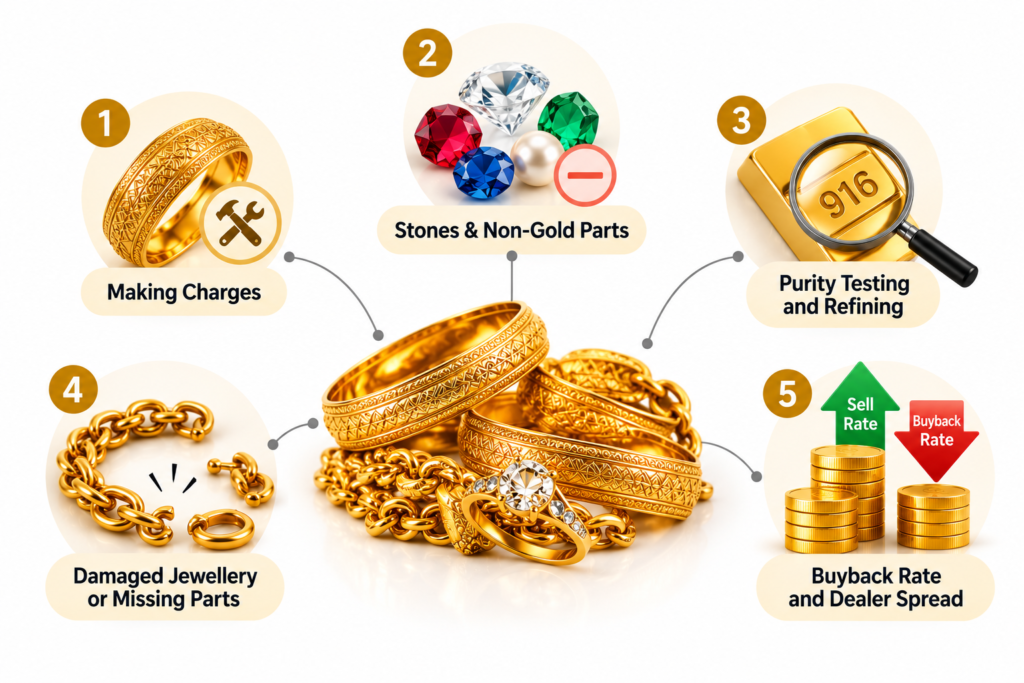
1. Making Charges
Making charges cover the labour, craftsmanship and design involved in producing jewellery. They form part of the original purchase price but are not automatically recovered when you resell the item.
Some retailers explicitly deduct original making charges during exchange transactions
For more details, see our guide to gold making charges in Dubai.
2. Stones and Non-Gold Components
Diamonds, gemstones, pearls, enamel, and other substances can be used to make gold jewellery. These components shouldn’t take it for granted as gold.
Ask the buyer how the eligible gold weight is determined and whether stones or other materials are assessed separately.
Al Fanan Jewellery’s buyback policy specifically identifies stones and non-gold components as deductions in its programme.
3. Purity Testing and Refining
Buyers, especially in the absence of a good hallmark or an uncertain composition of a piece of jewellery, may require confirmation of a jewel’s purity.
Always ask if the testing, refining, or processing fee impacts your payout and how much it costs you before agreeing to it. Not all buyers will charge the same fee!
4. Damaged Jewellery or Missing Parts
Broken chains, damaged clasps, and missing components can affect an item’s assessment. The impact depends on the remaining gold content and the buyer’s stated terms.
Ask whether the offer reflects the actual eligible gold weight or includes a separate damage-related deduction.
5. Buyback Rate and Dealer Spread
The rate a dealer offers when selling gold may differ from the rate offered when buying it back. This difference is known as the buyback spread.
Compare the buyer’s actual rate for your karat with the relevant published reference rate. Avoid relying on a claimed standard deduction percentage without seeing the calculation for your item.
Does VAT Apply to Gold Buyback in Dubai?
The standard rate of VAT in the UAE is 5%; however, the tax treatment is subject to the product and transaction.
An investment precious metal is eligible for zero-rating when it is at least 99% pure as well as in a form that can be traded on the worldwide bullion markets, according to the Federal Tax Authority.
Just because gold is present in jewellery doesn’t guarantee that it is treated like gold. Not all jewellery contains gold, so not all jewellery is treated like gold. Do not reckon that the original VAT if paid on a jewellery purchase will be returned at the same time when it is sold to another retailer.
For the official guidance, consult the UAE Federal Tax Authority and its VAT guidance on gold making charges.
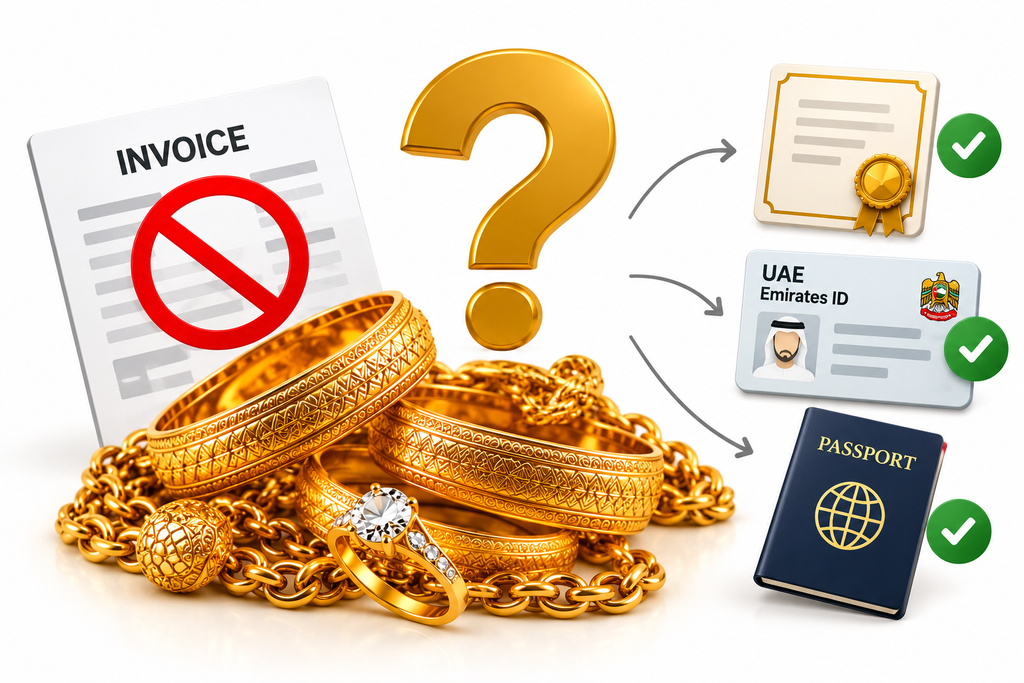
Can You Sell Gold in Dubai Without an Original Invoice?
There is a difference between retailers’ and dealers’ requirements. Some will evaluate jewellery without using the original bill of sale, and others will require proof of purchase or other documents.
When shopping, ask yourself the following questions:
- The original invoice or electronic copy of the invoice.
- Certificate of authenticity as required.
- Emirates ID and/or passport.
- Other documents for large money dealings.
A hallmark can help identify stated purity, but it does not replace any verification the buyer requires. Read our guide on how to check gold purity in Dubai.
Gold Buyback vs Gold Exchange: What Is the Difference?
Gold buyback generally refers to selling gold to a buyer for payment. Gold exchange means using the assessed value of an existing item towards another purchase, often under a retailer’s programme.
The difference is important because the exchange may stipulate what jewellery can be traded (or not), require proof, deduct certain items, and offer various payment options.
Frequently Asked Questions
1. How does gold buyback work in Dubai?
Gold buyback involves selling eligible gold jewellery, coins or bullion to a buyer. The offer depends on the gold’s purity, eligible weight, applicable buyback rate, and any disclosed deductions.
2. How is the gold buyback price in Dubai determined?
The estimated value calculation follows this method: Eligible gold weight multiplied by the appropriate rate per gram based on the gold’s karat. Then, if there are any applicable deductions, they are subtracted in determining the final payout.
3. Do gold shops in Dubai deduct making charges during buyback?
Making charges are generally not recovered when selling jewellery. However, deductions depend on the buyer’s specific policy and whether the transaction is a cash buyback or an exchange.
4. What deductions apply when selling gold in Dubai?
Possible deductions include non-gold components, stones, testing or refining costs, and differences between reference prices and the buyer’s rate. Not every buyer applies every deduction, so request an itemised quotation.
5. Can you buy or sell gold in Dubai without an invoice?
Some purchase documents are accepted; others want the original invoice or certificate of the gold. Please check your requirements with the retailer before your visit.
Final Thoughts
To secure a fair Dubai gold buyback, start by understanding your gold’s purity, verifying the best gold rate, and knowing all the deductions. Avoid selling without checking the offers from reputable buyers, checking the maximum weight allowed, and getting a detailed breakdown of how much you are going to get for the deal. Don’t assume that the best rate is the one that is emphasized in the advertising. Before making a decision to sell gold or exchange gold, always consider the amount of gold you’ll receive from the gold buyback or exchange offer.